Introduction: Belize – Geography and Demographics
Belize, formerly British Honduras, is located on the northeast coast of Central America. It borders Mexico to the north, Guatemala to the west, Honduras to the south, and the Caribbean Sea to the east. It is the only English-speaking country in Central America but is increasingly bilingual, with Spanish widely spoken. Covering 8,867 square miles, Belize has a 174-mile coastline and boasts the largest barrier reef in the Western Hemisphere—the second largest globally—along with numerous Cayes (islets).
The population of Belize, as of 2023, is approximately 398,000, with nearly 75% under 30 years old. Ethnic composition includes Mestizos (52.9%), Creoles (25.9%), Maya (11.3%), Garifuna (6.1%), and East Indians (3.9%), reflecting the nation’s diverse cultural heritage. Belize City, the former capital, remains the largest urban center with over 80,000 residents.
Roots of the Nation of Islam: A Transatlantic Perspective
The Nation of Islam (NOI), often described as a “pseudo-Islamic” movement by scholars, played a critical role in spreading Islam among African Americans and the African Caribbean. Founded in the early 1900s in the United States, the NOI emerged in an era marked by post-Reconstruction disillusionment, systemic racism, and social oppression of Black communities.
Early African-American Islamic movements, such as the Moorish Science Temple, the Ahmadiyyah Movement, and the NOI, were shaped during the Harlem Renaissance alongside Pan-Africanist initiatives led by Marcus Garvey’s UNIA. Historian C. Eric Lincoln characterized Black Nationalism, foundational to the NOI, as emphasizing:
A demeaning attitude toward white individuals and culture,
Rejection of the imposed “Negro” identity, and
Allegiance to African heritage.
Elijah Muhammad, leader of the NOI, propagated a worldview asserting that the white race was created by Yakub, a Black scientist, and that Black people were to reclaim their rightful place. This mythology fostered economic self-sufficiency, the creation of Black-owned businesses, and the pursuit of a separate Black nation.
Muhammad E. U. Essien-udom highlighted that beyond mythology, the NOI offered Black Americans a sense of nationhood, community discipline, and moral improvement, which contributed to its widespread appeal.
Early Muslim Presence in the Caribbean and Belize
The Muslim presence in Belize predates modern organizations like the NOI. Dr. Abdullah Hakim Quick notes that Muslims had been part of the Caribbean for over a millennium, long before European contact. This presence manifested in cultural retention, visible in celebrations, rituals, and daily practices among African-descendant communities.
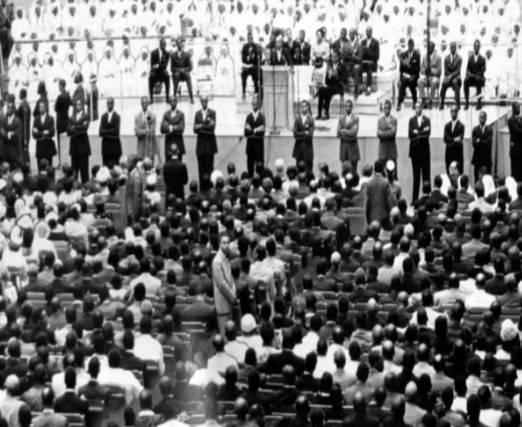
For example, the Sambai drum, central to Creole and Garifuna festivities, originates from Gambia—a predominantly Muslim region—linking African Belizeans to Muslim cultural roots. Similarly, historical accounts from Reverend Bridges and Robert Madden in Jamaica document enslaved Africans maintaining Islamic faith in secret, reading Arabic, and performing rituals despite Christian impositions.
In Belize, historian Nigel Bolland notes that by 1823, Africans formed the majority of the enslaved population. References from the Honduras Almanac of 1838 indicate that some free and enslaved Africans rejected alcohol due to Islamic customs, demonstrating early religious influence.
The Three Waves of Muslim Migration to Belize
East Indian Indentured Laborers: Arriving in the late 1800s, most were Hindu or Dravidian, but traces of Muslim culture persisted. The Husse-Messe dance commemorates the martyrdom of Hussein in Shi’a tradition. Streets like Muhammadali Street in Belize City preserve this heritage.
Arab Merchants: Between 1920–1930, Muslims from Palestine, Lebanon, and Egypt migrated to Belize, marrying Mestizo women. Despite maintaining some Islamic practices privately, most descendants today identify as Christian.
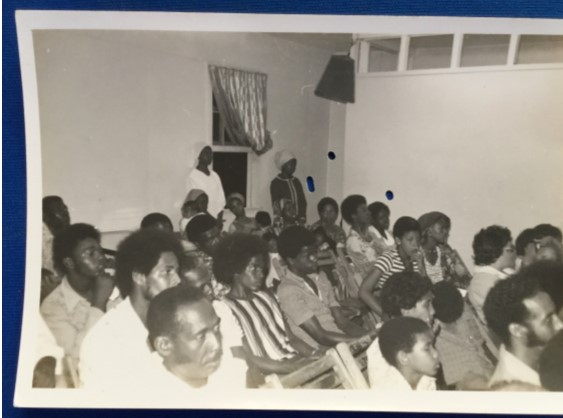
Nation of Islam Missionaries: In 1960, Charles X Eagan (Justice) introduced NOI teachings in Belize. Later, in 1972, Bert X Simon (Nuri Muhammad) successfully established the first NOI temple in Belize, combining religious teachings with economic initiatives.
Conclusion
Muslim presence in Belize reflects a complex tapestry of migration, cultural retention, and religious evolution. From African Muslim ancestors to modern Sunni communities, Belize’s Muslims have preserved their faith, adapted to local conditions, and contributed to society’s broader social and cultural development. The Islamic Mission Belize (IMB), established as a result of these efforts, today represents a fully authentic Sunni community grounded in the Quran and Sunnah.
About AQ
A dedicated Islamic scholar and educator committed to sharing knowledge and promoting understanding of Islam.
Related Articles
Islam and Cultural Retention in Belize: From Slavery to Modern Communities
Islam in Belize is more than a religion; it is a living testament to the resilience and cultural continuity of African and immigrant communities. From enslaved Africans who secretly practiced Islam to East Indian and Arab settlers preserving their traditions, this article explores how Islam has influenced Belizean culture, education, and social life.
The Historical Roots of Islam in Belize Before 1972
Islam existed in Belize long before 1972, carried by enslaved Africans, indentured Indians, and early Arab migrants. Evidence includes West African Islamic practices, Arabic literacy, ritual prayer traditions, and cultural elements like the Sambai drum and “Husse-Messe” dance. Though formal institutions did not survive slavery, these fragments reveal deep spiritual roots in Belizean history.
African Muslim Heritage in the Caribbean Before European Contact
Long before European colonization, historical arguments and cultural traces suggest that Muslims from West Africa had already reached parts of the Americas and the Caribbean. This article explores early African Muslim presence and its lasting cultural impact.