Introduction
The mid-1970s marked a decisive turning point in the history of organized Islam in Belize. What began as a branch of the Nation of Islam underwent a profound transformation that reshaped its theology, governance, and relationship with Belizean society. This shift was triggered by leadership changes within the global movement and embraced locally by a community eager to align itself with orthodox Islamic teachings.
The emergence of Islamic Mission Belize represents one of the most significant religious transitions in Caribbean Islamic history. It demonstrates how communities can evolve doctrinally while maintaining institutional continuity and social relevance.
Leadership Reform and Global Influence
In 1975, leadership of the Nation of Islam passed to Warith Deen Mohammed, who immediately initiated sweeping reforms. He redirected followers toward mainstream Sunni Islam, emphasizing strict adherence to the Qur’an and the Sunnah of Prophet Muhammad.
His call for decentralization encouraged local communities to become autonomous and self-governing. For Belize, this instruction catalyzed a process of internal reflection and restructuring.
Institutional Reorganization in Belize
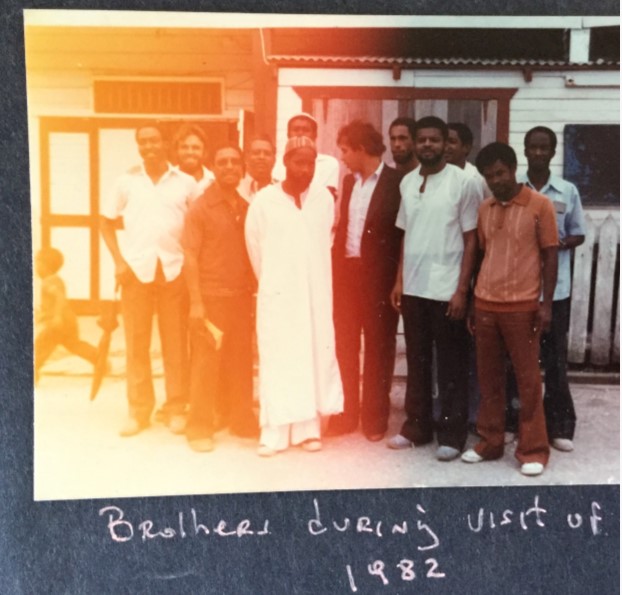
Belizean Muslims embraced autonomy and reorganized their institutions. In 1977, the community formally registered under Belizean law as Islamic Mission Belize. Governance shifted to a consultative model based on shura, ensuring collective decision-making.
Educational development became a priority. The Sister Clara Muhammad School, opened in 1976, received government recognition and financial assistance, allowing the community to manage religious education within the national framework.
Infrastructure and Community Stability
The construction of permanent facilities symbolized institutional maturity. After years of renting spaces, the community began building its own masjid and educational structures in 1983. In 2010, Masjid Al-Falah was completed through generous contributions from benefactors.
These developments provided stability and visibility, anchoring Islam as a recognized component of Belize’s religious landscape.
Conclusion
The birth of Islamic Mission Belize illustrates how theological reform can lead to institutional strength. By embracing orthodox Islam and autonomous governance, the community secured both religious authenticity and social legitimacy.
About Sadia
A dedicated Islamic scholar and educator committed to sharing knowledge and promoting understanding of Islam.